What is Traditional Timber Frame Joinery?
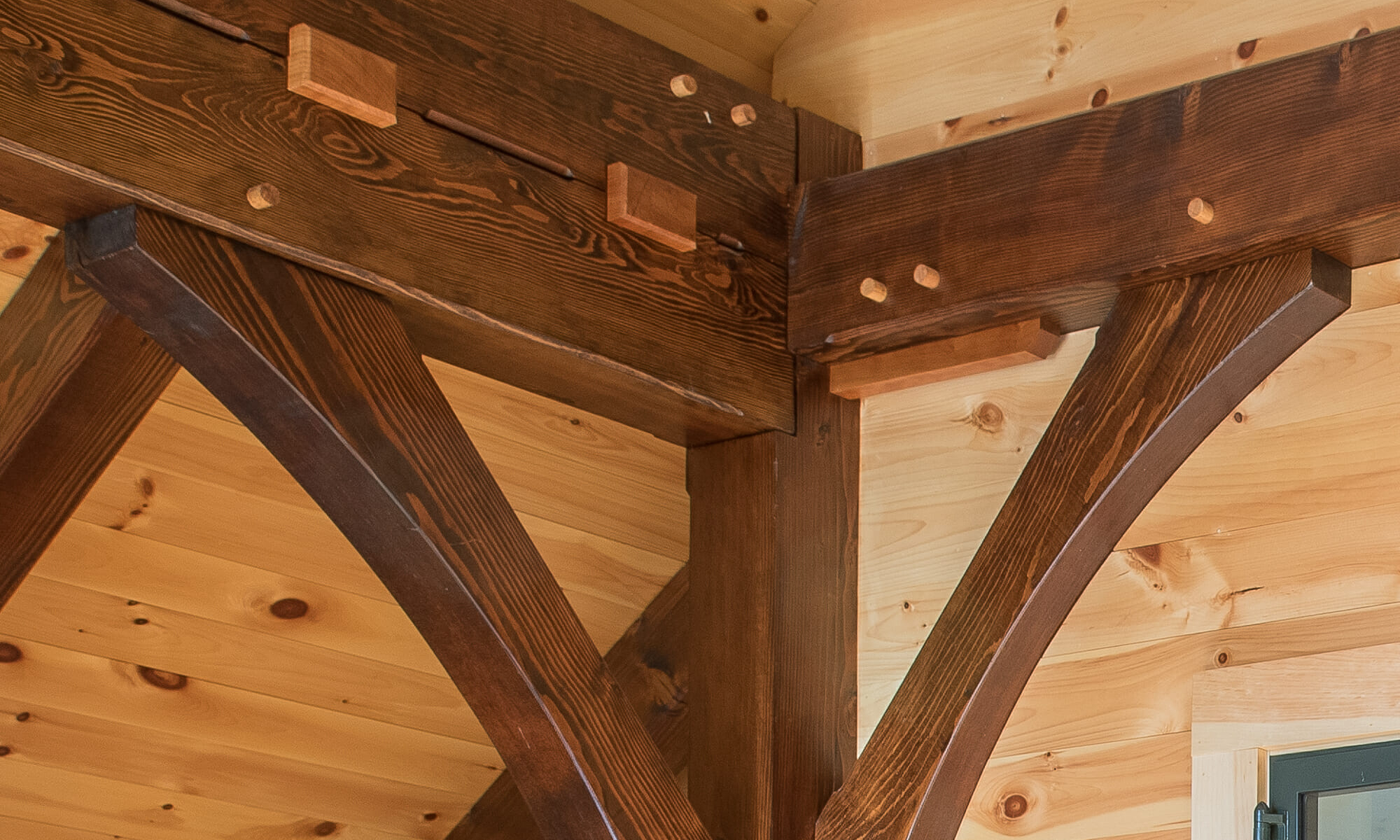
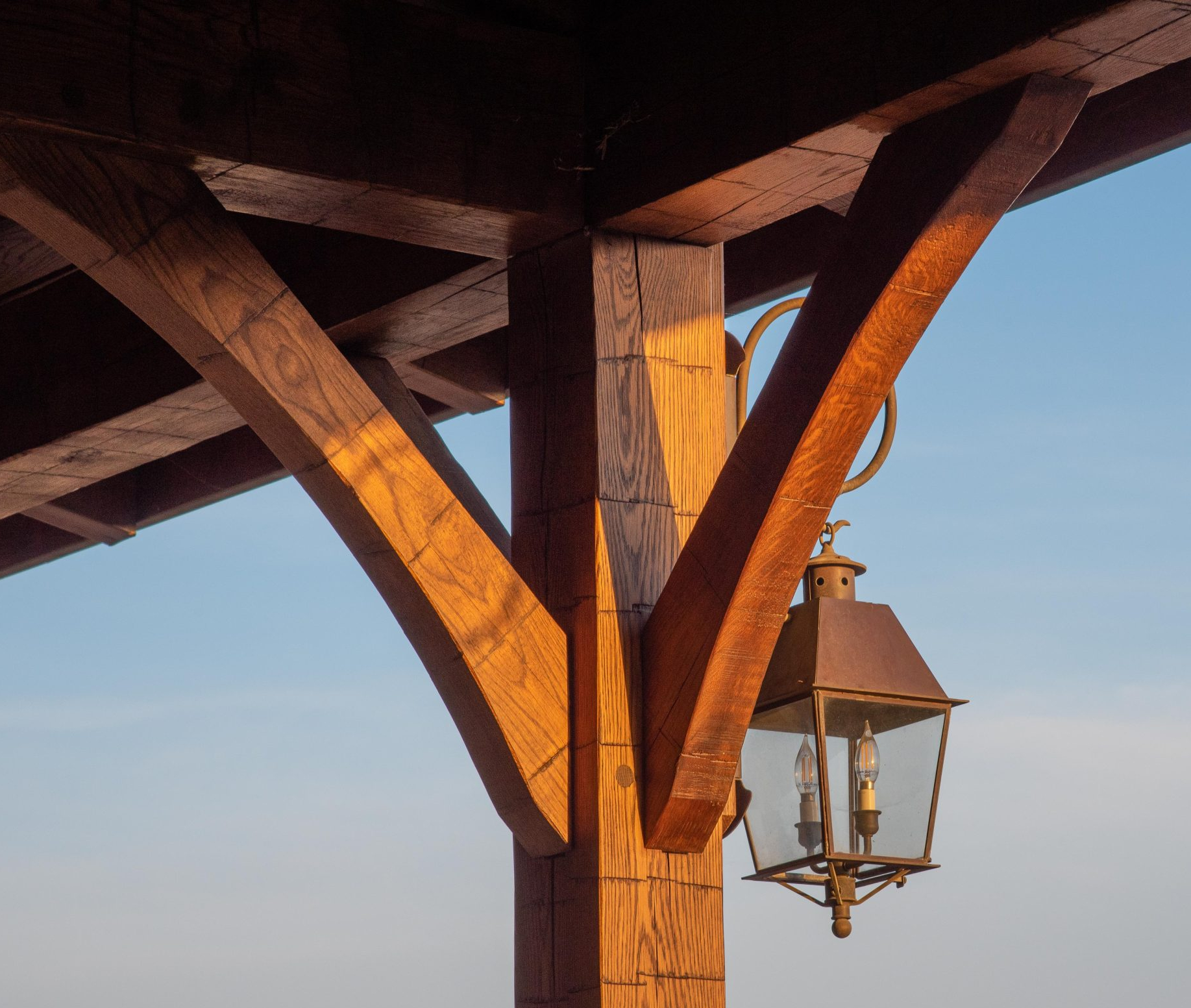
Timber Frame Joinery is the method that individual beams are connected together to create the structure of a building. Traditional joinery uses mortices, tenons, dovetails and wooden pegs at each terminating end of a timber to connect to the next adjacent timber. Tenons fit into mortices and dovetails fit into a negative space of the same shape on a beam.
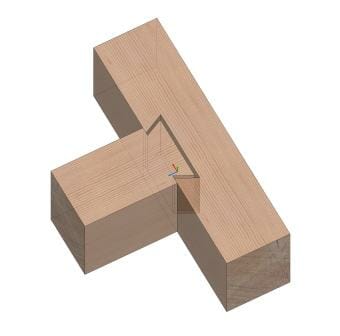
Dovetail – Used for Joists and Purlins
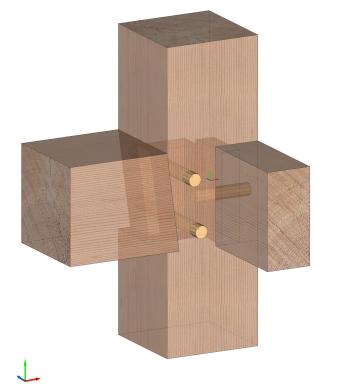
Shouldered Mortise and Tenon Joint
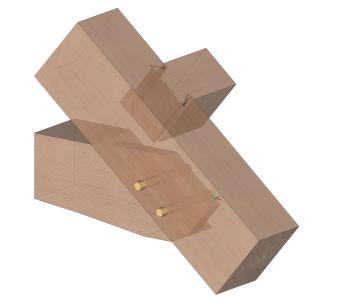
Collar Tie Joint with a Dovetailed Purlin
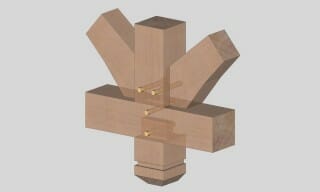
King Post and Finial Joint
What steel joinery can be used in timber frames or post and beam frames?
Often timbers, post and beams are held together with steel gusset plates, knife plates or concealed steel connections. Gusset plates create a sandwich on both sides of a timber. Bolts go through the gusset plates and timbers to hold them all together. Knife plates are cut into the center of the timbers with bolts that go through the timber and the knife plate. There are all sorts of concealed steel connections made of rods, lag bolts and plates that enhance traditional joinery when extra strength from snow, wind and seismic loads are high.
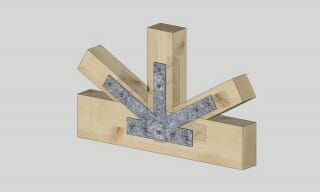
Steel Gusset Plate
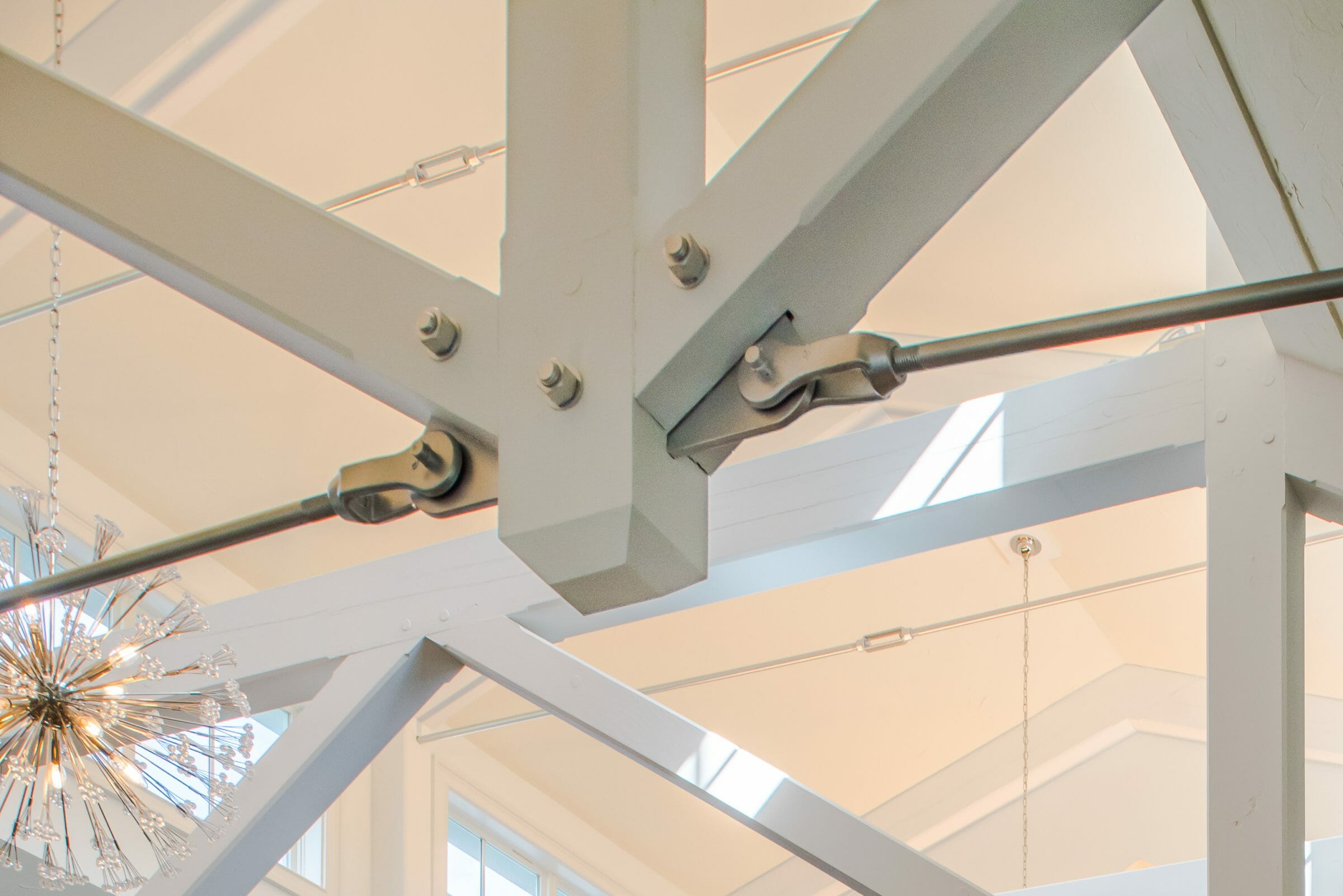
Steel Knife Plate with Rods and Clevis
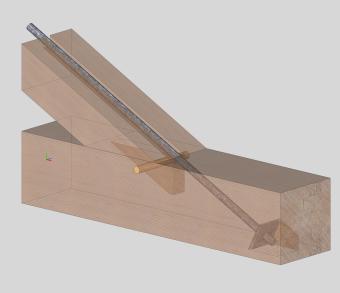
Hidden Steel Tension Rod
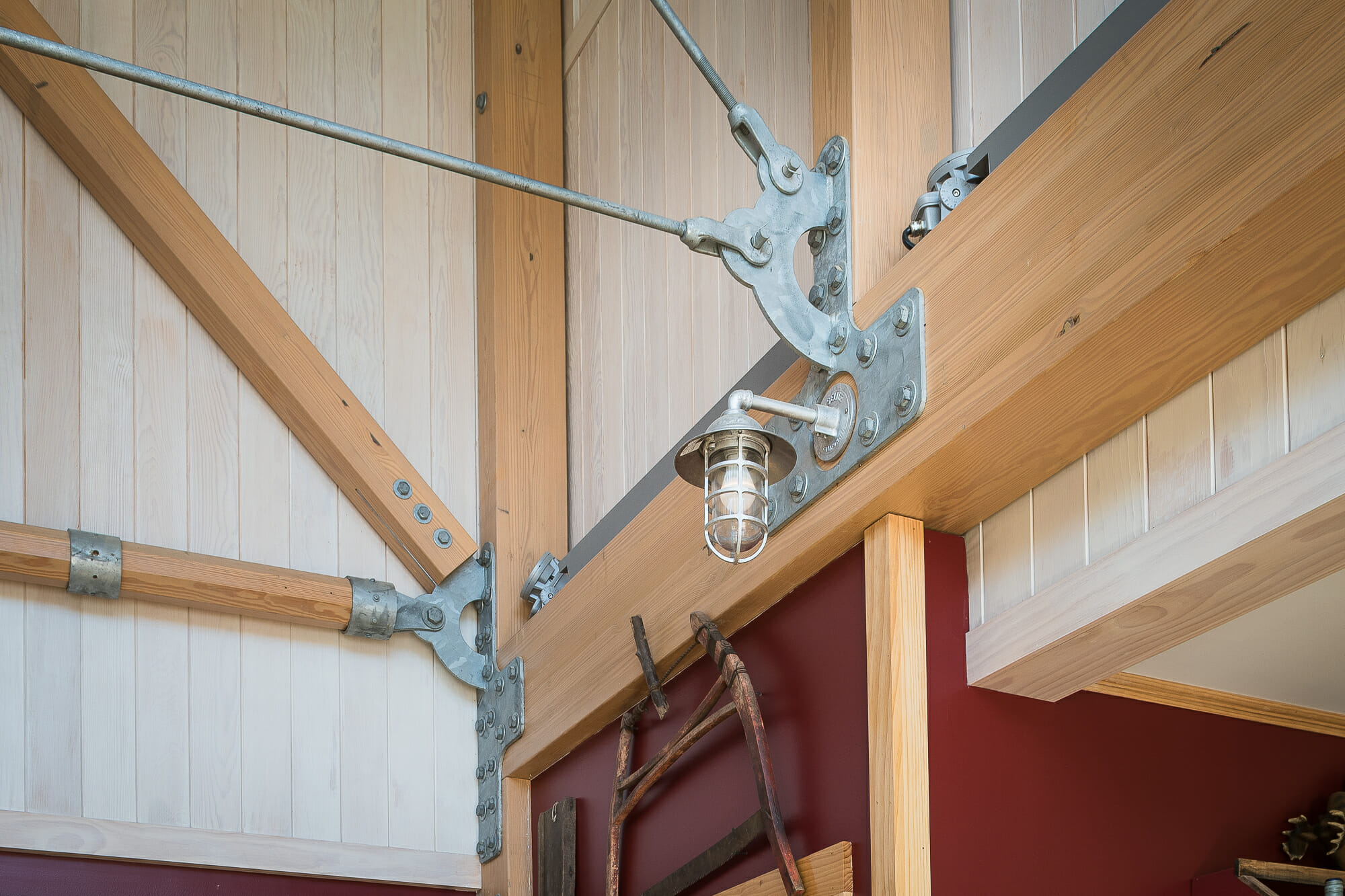
Decorative Steel Gusset Plates & Rods
In a timber frame, which is stronger, steel or traditional joinery?
Steel joinery is usually stronger in tension, but both steel joinery and traditional joinery are very strong in compression. Often the choice of using steel vs traditional joinery comes down to aesthetics. Some people like the look of steel gusset plates which are reminiscent of old mill buildings while others prefer to the look of wooden joinery. When steel tension ties are required, but the client doesn’t like the look of steel, the steel can be routed into the timber and hidden. Sometimes of steel and wooden joinery is the perfect look for a building.

King Post Truss with a Steel Splice Plate
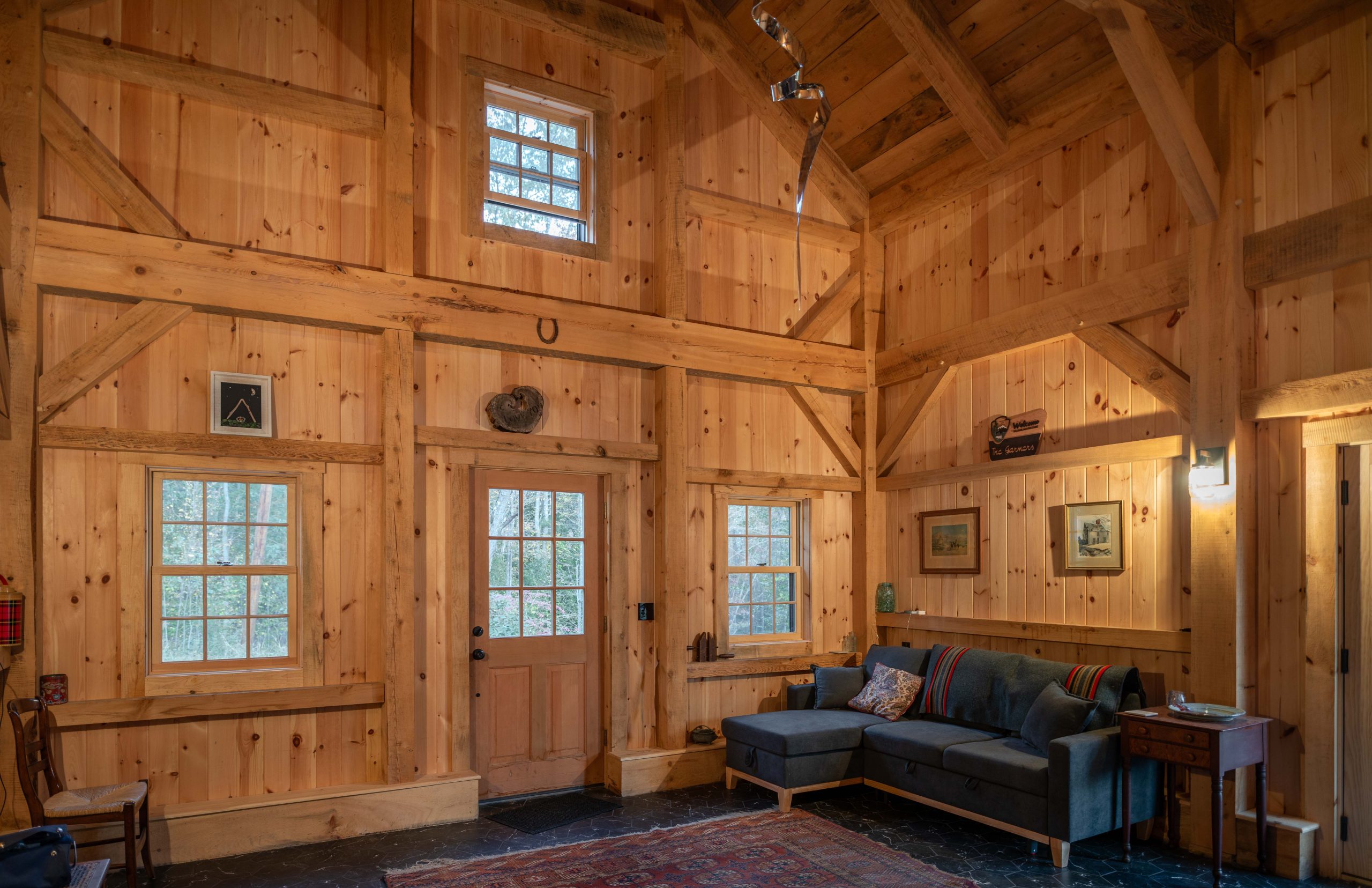
Traditional Timber Joinery
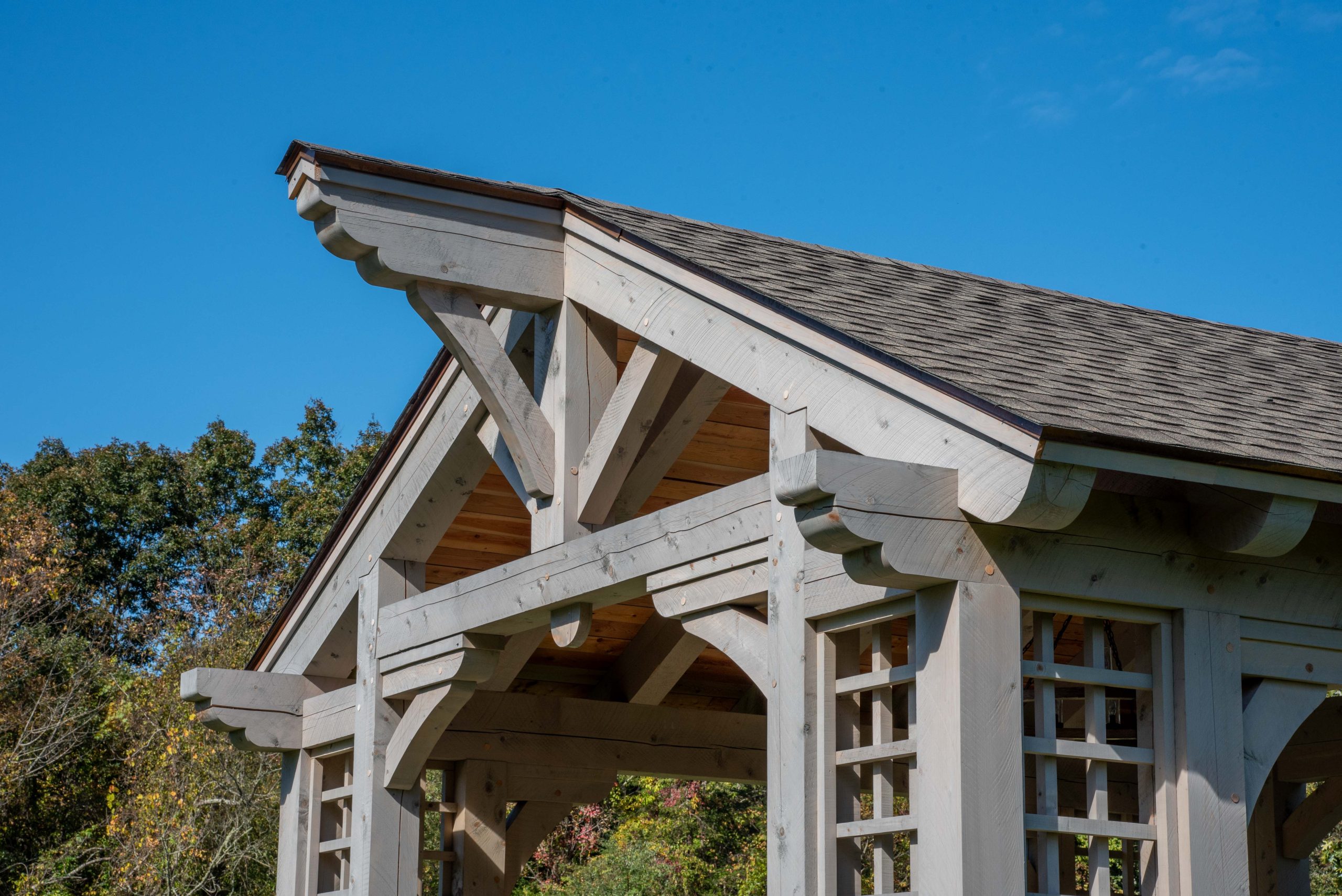
Decorative Corbels and Rafter Tails
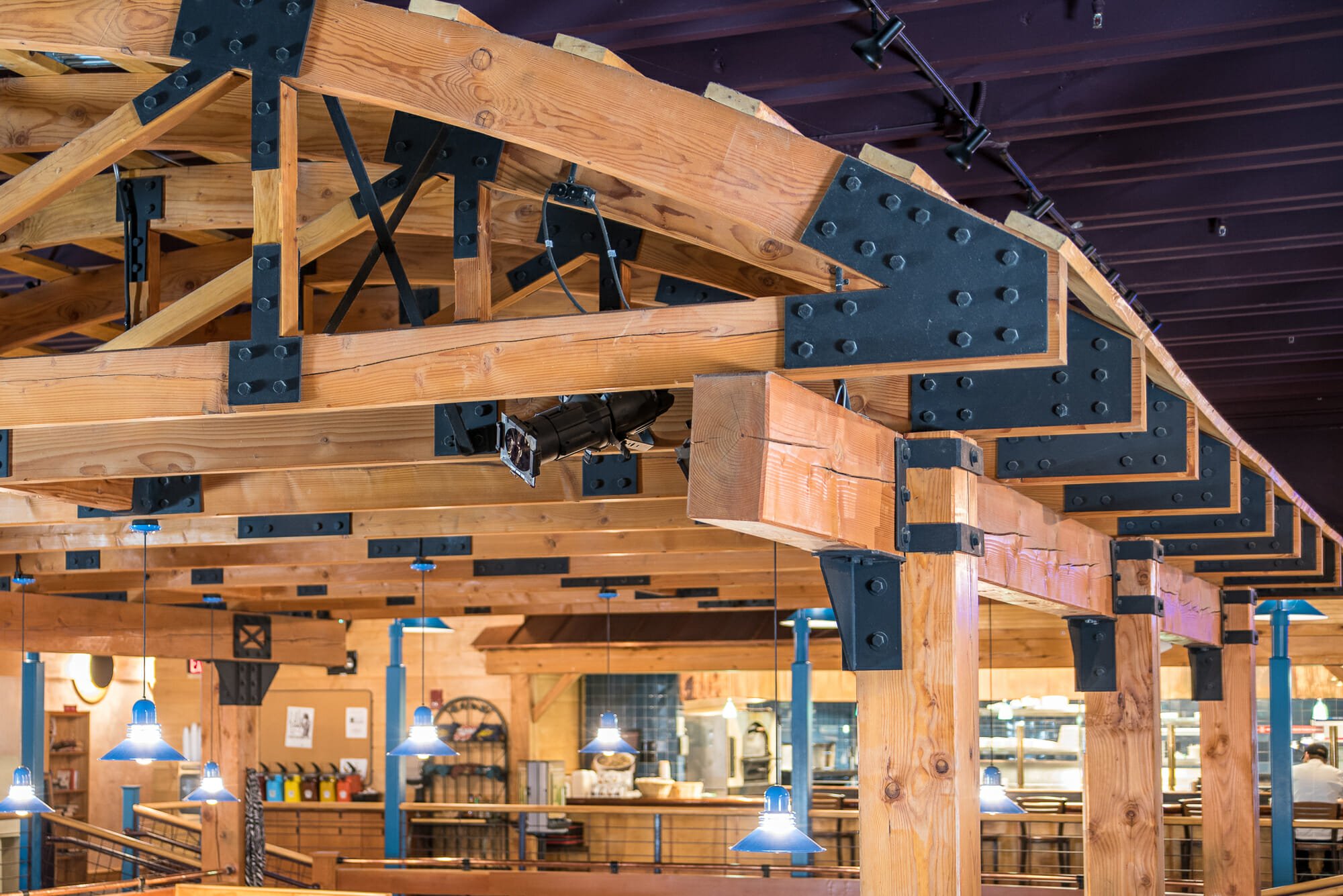
Blackened Steel Gusset Plates
Are steel gusset plates always black?
Steel gusset plates can be any color. Black is a traditional color, perhaps because it looks a little bit like wrought iron. Galvanized steel is a popular choice and often required if the steel is exposed to the weather. Galvanized or raw steel can be painted any color depending on the client’s choice.
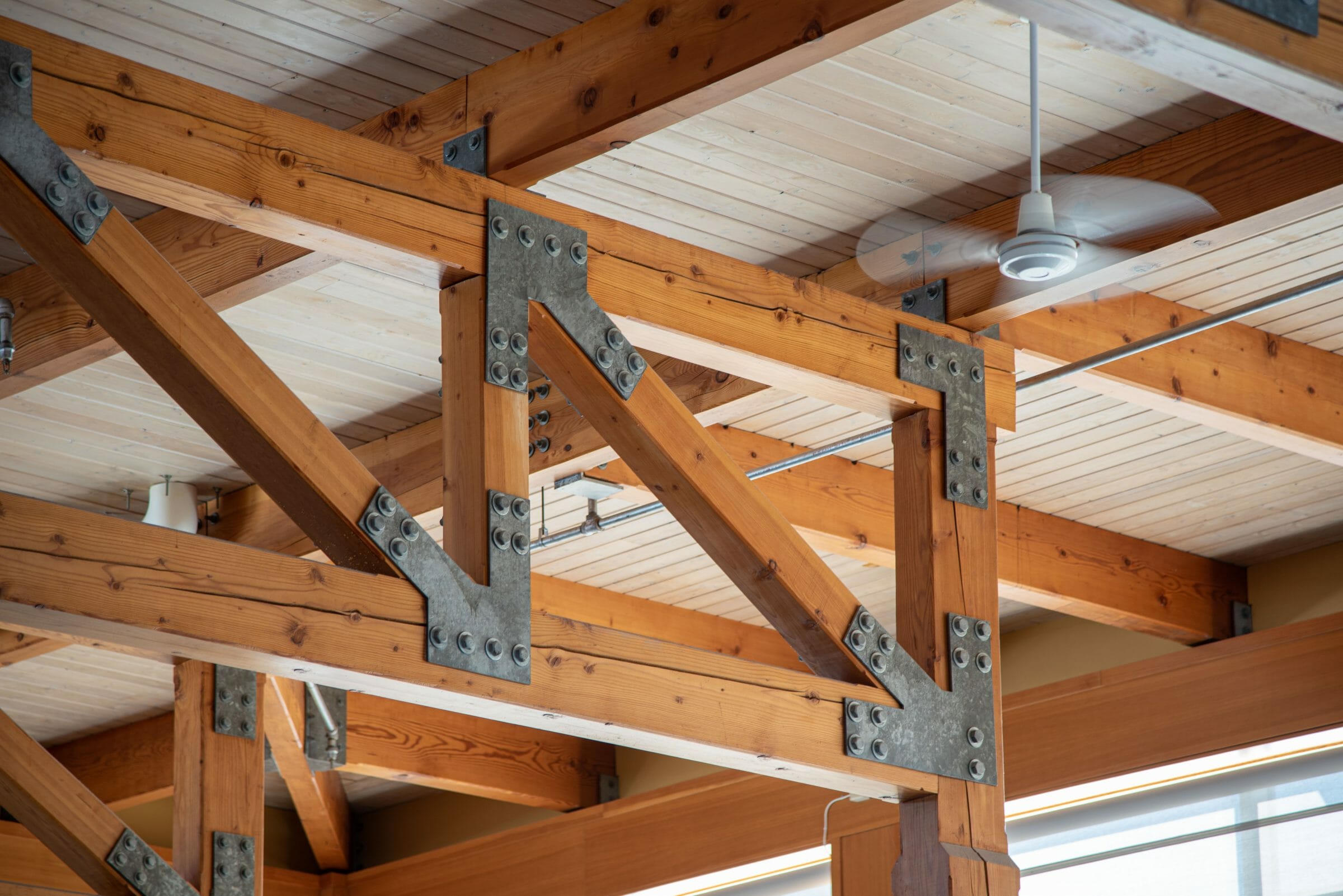
Galvanized Steel Gusset Plates
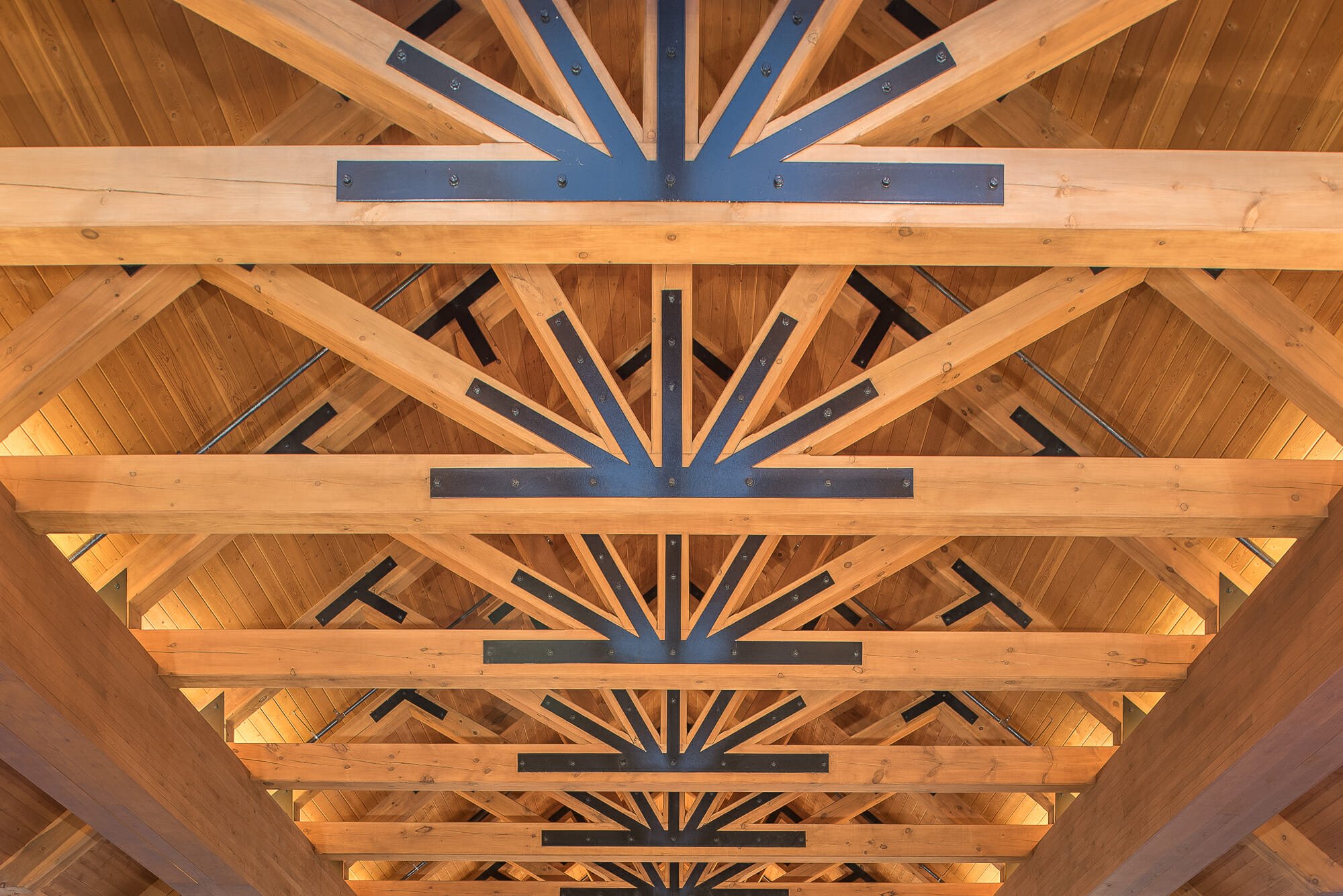
Blackened Steel Gusset Plates
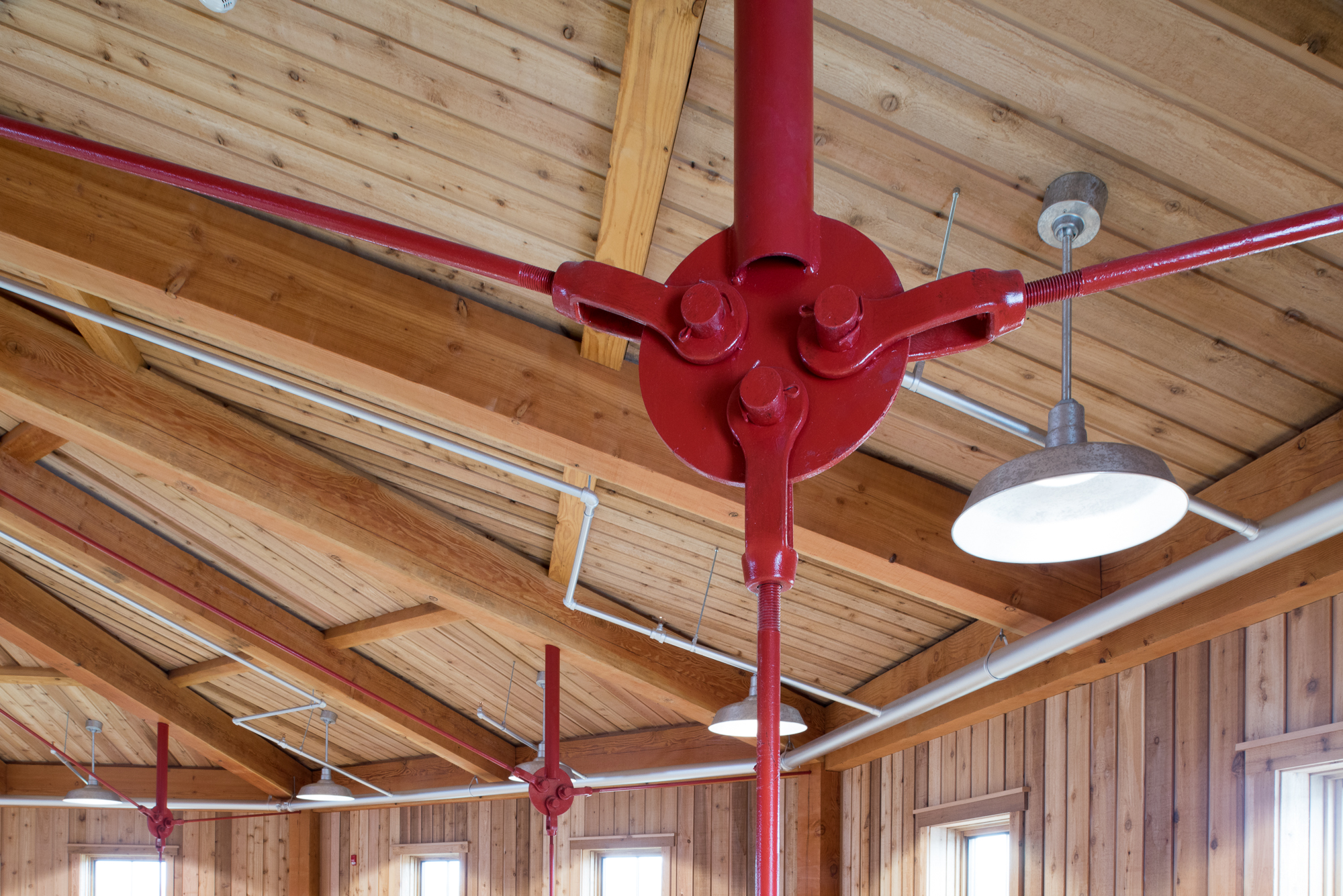
Steel Tie Rods and Clevis’s Painted Red
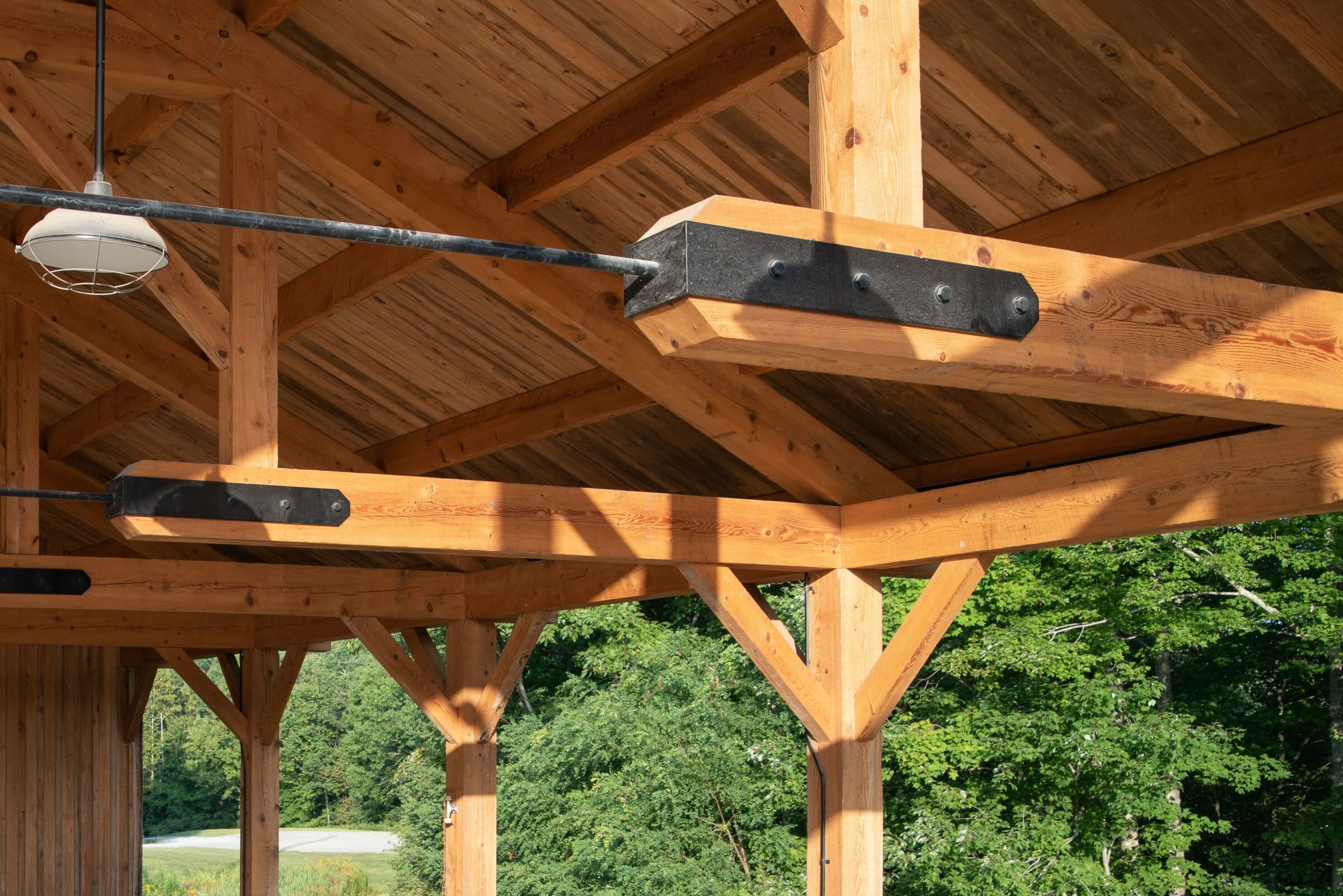
Black Steel Tension Boot
How are traditional timber framed joints made?
Traditional timber framed joints are made with a variety of tools. Many shops have gone to cutting joinery with computer aided machines. At Vermont timber works, we cut joinery the old fashioned way with hand and power tools. We do use power mortising machines, drills, routers and saws as well as hand tools like chisels, mallets, pull saws and planes for fine precision work.
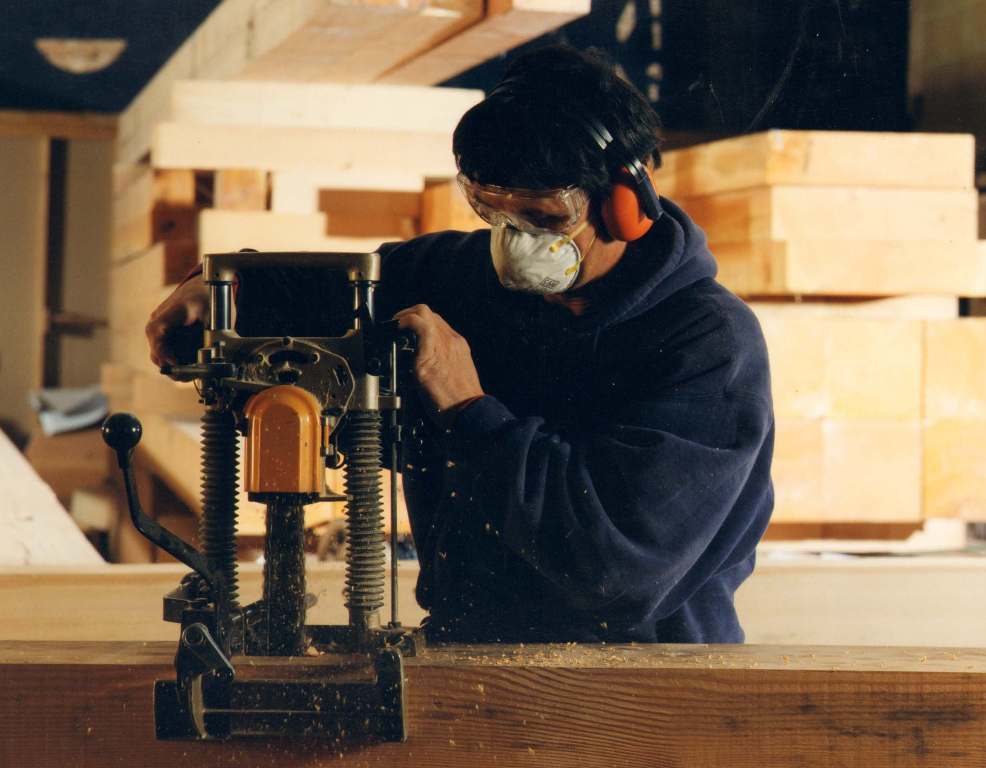
Mortising Machine
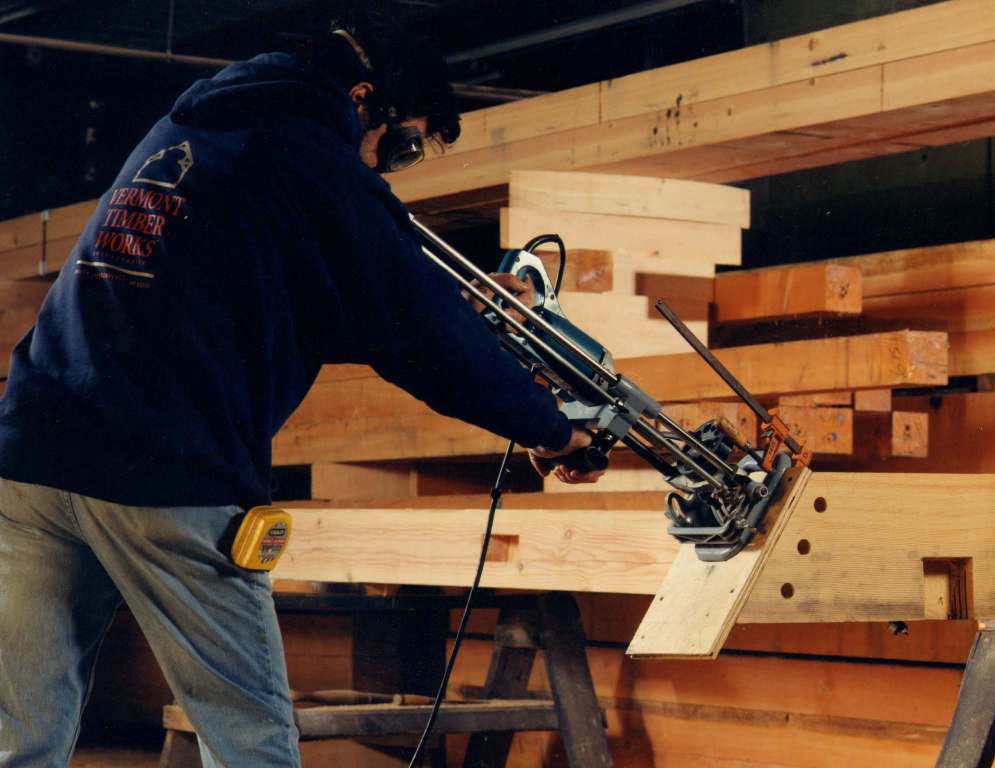
Hand Held Drill Press
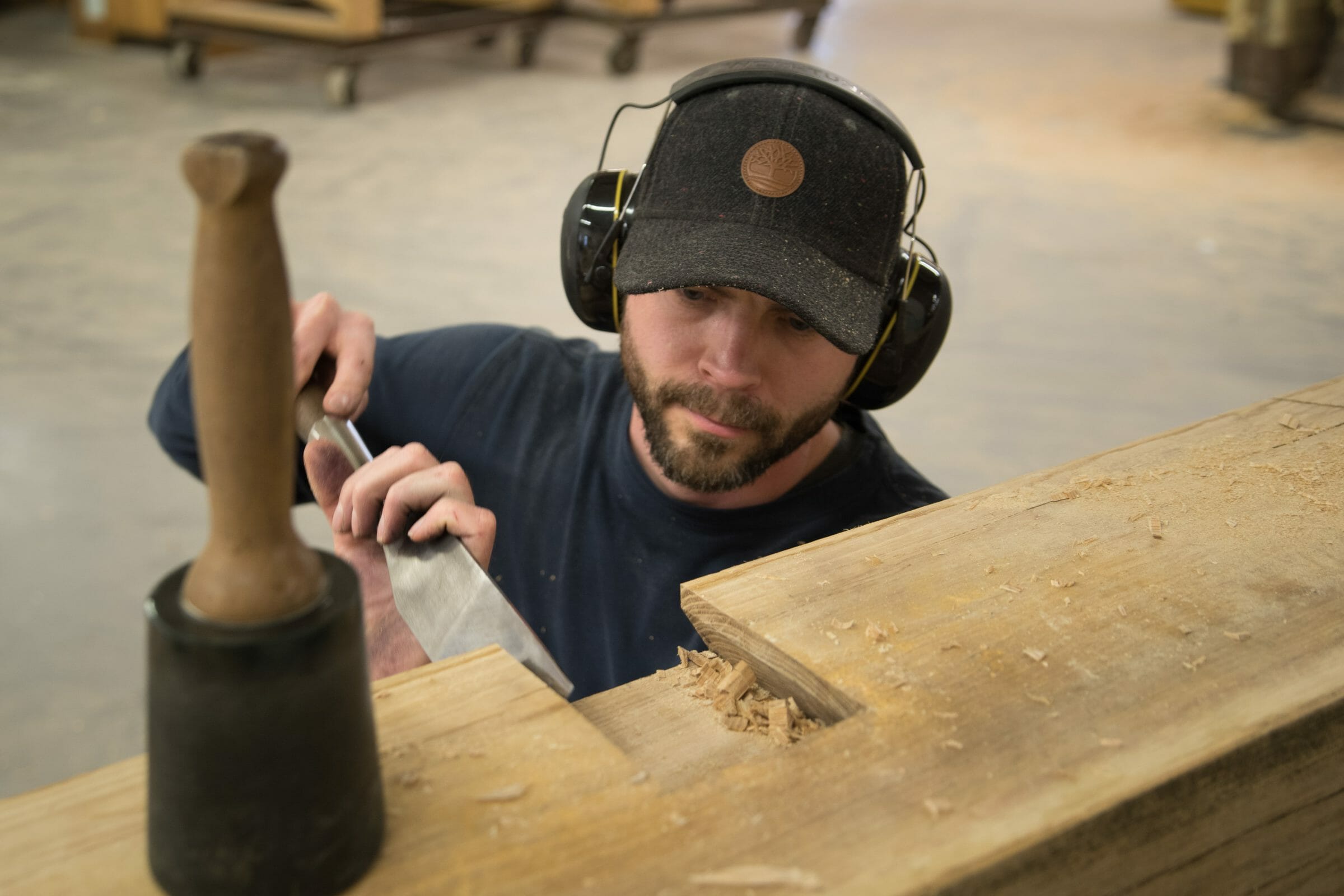
Handcrafting with Chisel and Mallet
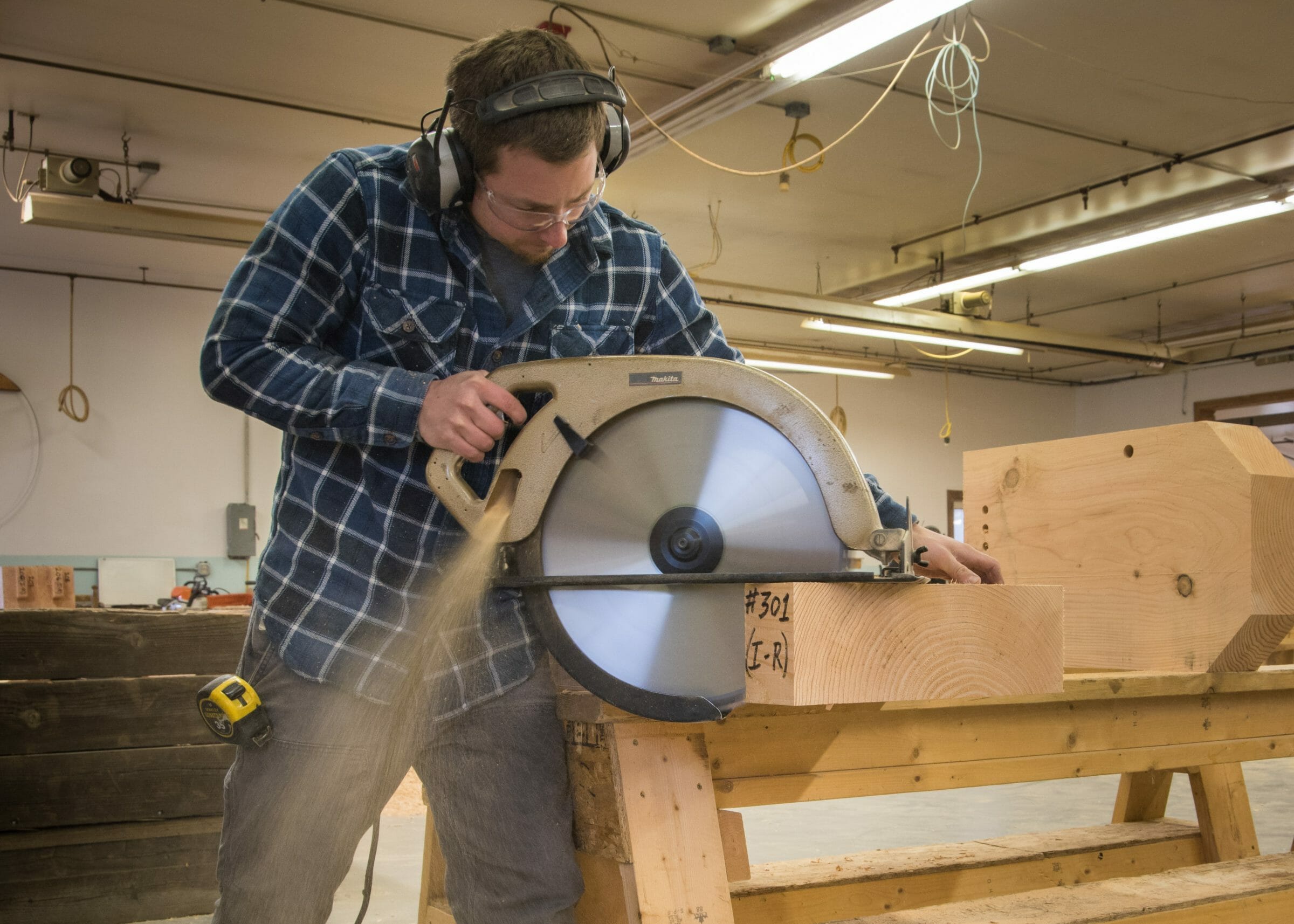
16″ Timber Saw
How are steel timber framing joints made?
Steel gusset plates, rods, end plates, boots, post bases, stand offs, etc. are all fabricated in a custom steel fabrication shop and shipped to VTW’s shop for final fitting into the timber frame. The timbers are cut, routed and shaped to accept the steel. Sometimes steel rods and knife plates are routed into the timber to hide them. Other times the timbers are just through drilled for gusset plates to be assembled on each side.
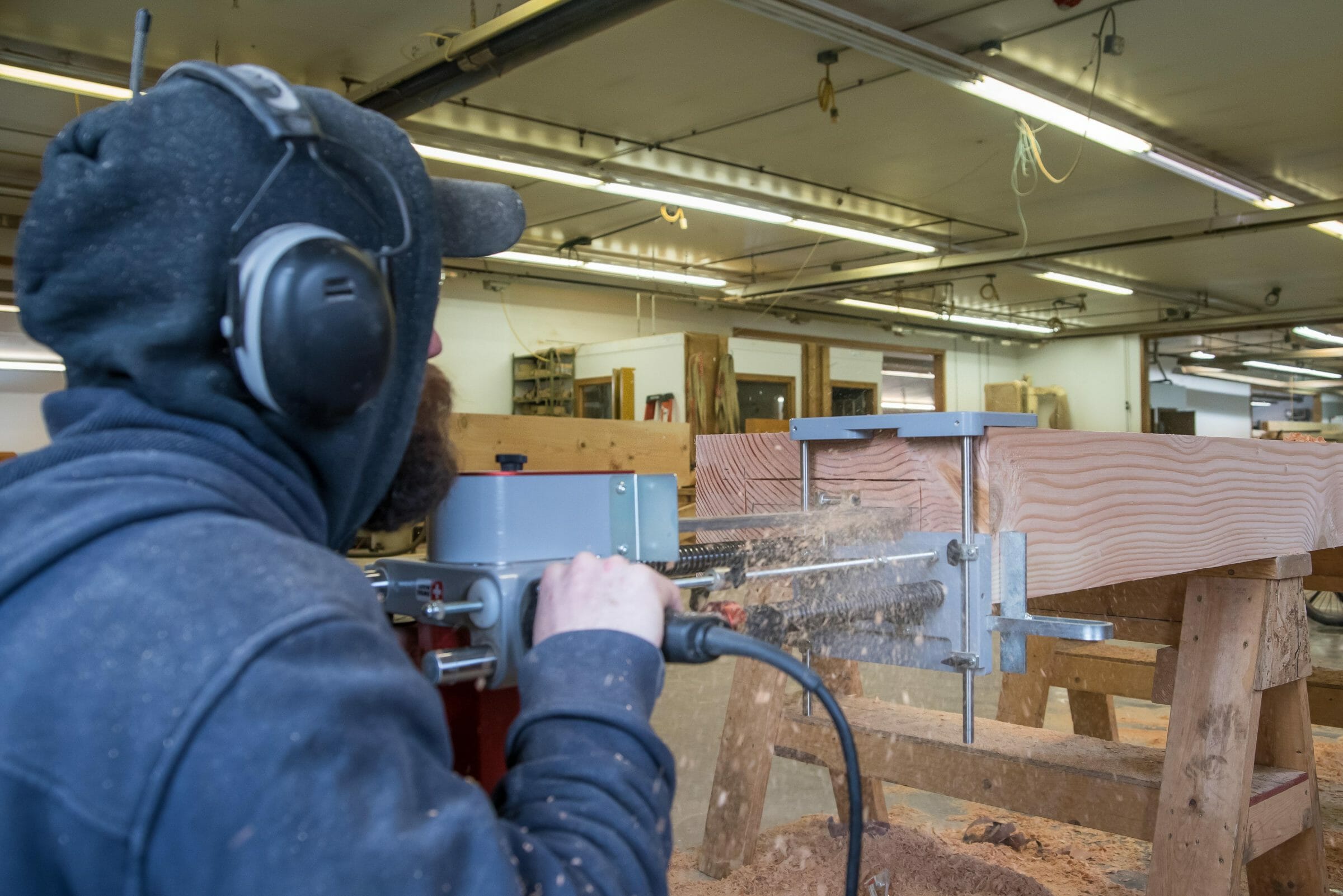
Slotting Machine for Knife Plates
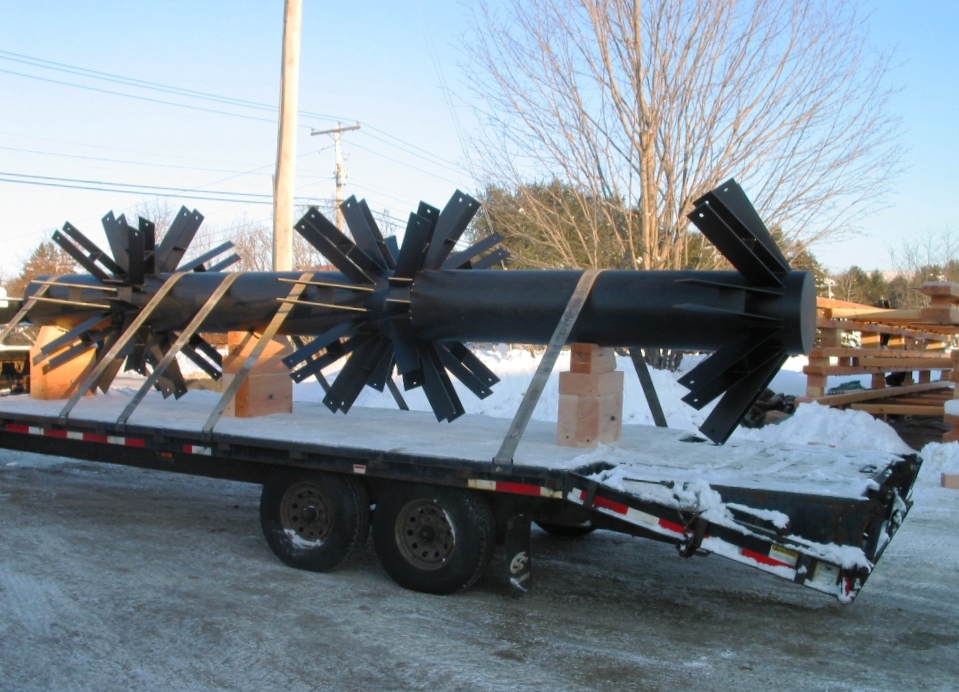
Prefabricated Steel Hub
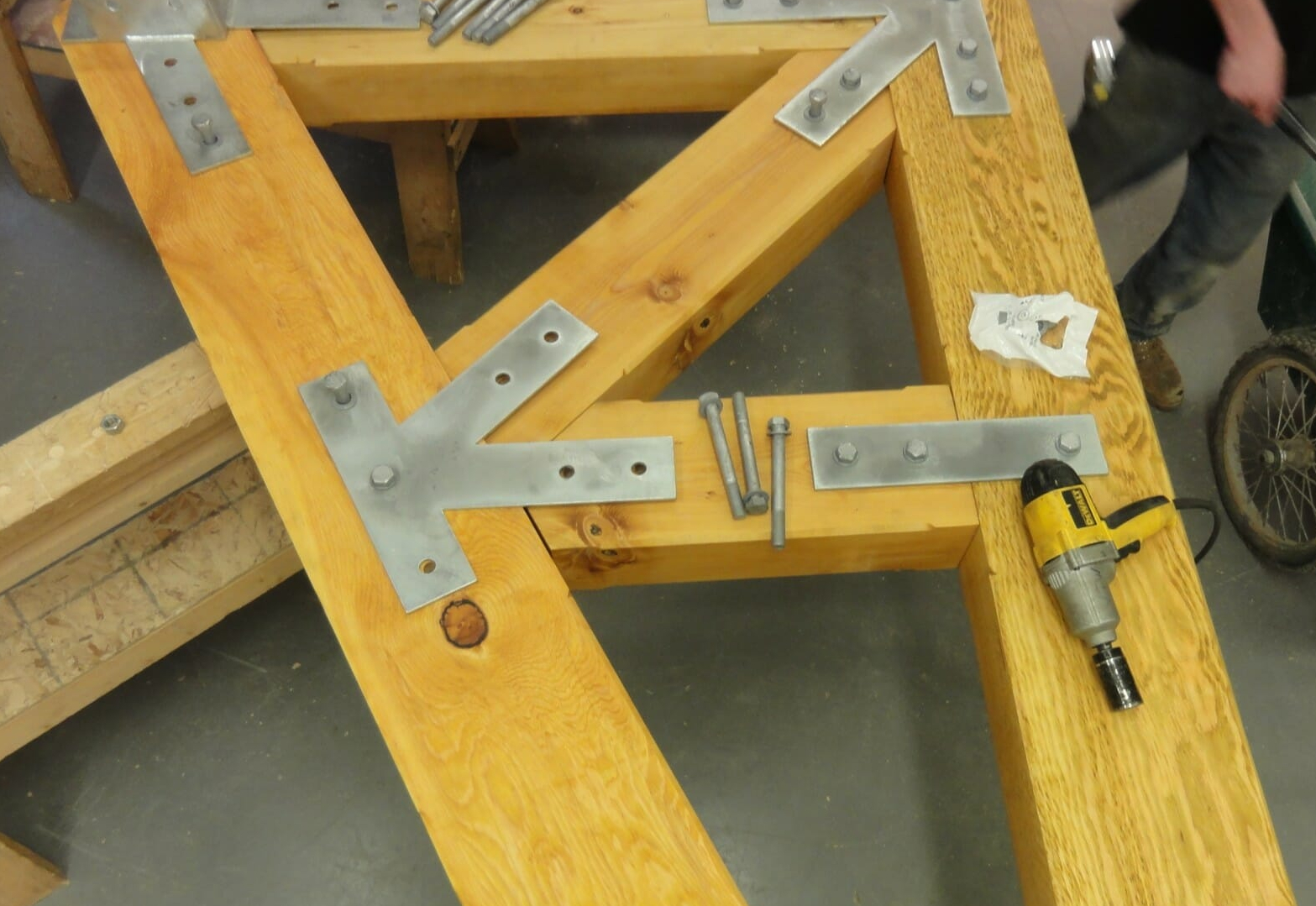
Gusset Plates on a Timber Truss
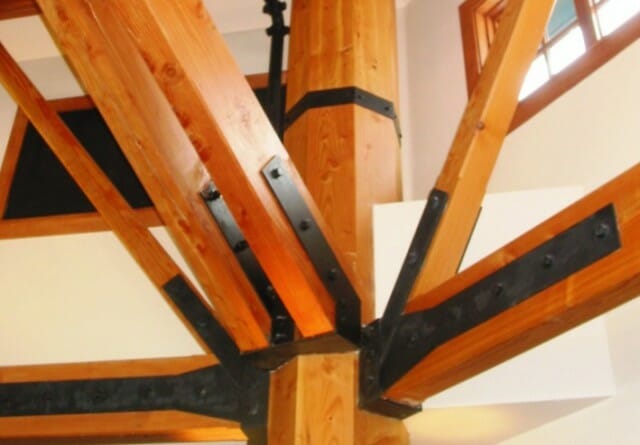
Black Steel Gusset Plates
In a timber frame, which is better - steel joinery or traditional wood joinery?
Both traditional wood joinery and steel joinery are excellent choices in a timber frame. One isn’t better than the other generally, but one may be required versus the other in specific cases. For instance, wood joinery is usually better in compressive joints where one timber bears on another. Steel joinery performs better with tension loads, where the joints are trying to pull apart, like with roof tie beams. Some people like the look of traditional wood joinery and some people like to see steel gusset plates. When steel joinery is required structurally but a client prefers not to see it, we can often hide the steel within the timber. Other people like the form and function approach to timber frame joinery, where both wood and steel are used where they are needed most.
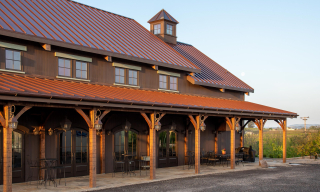
Traditional Timber Framed Porch
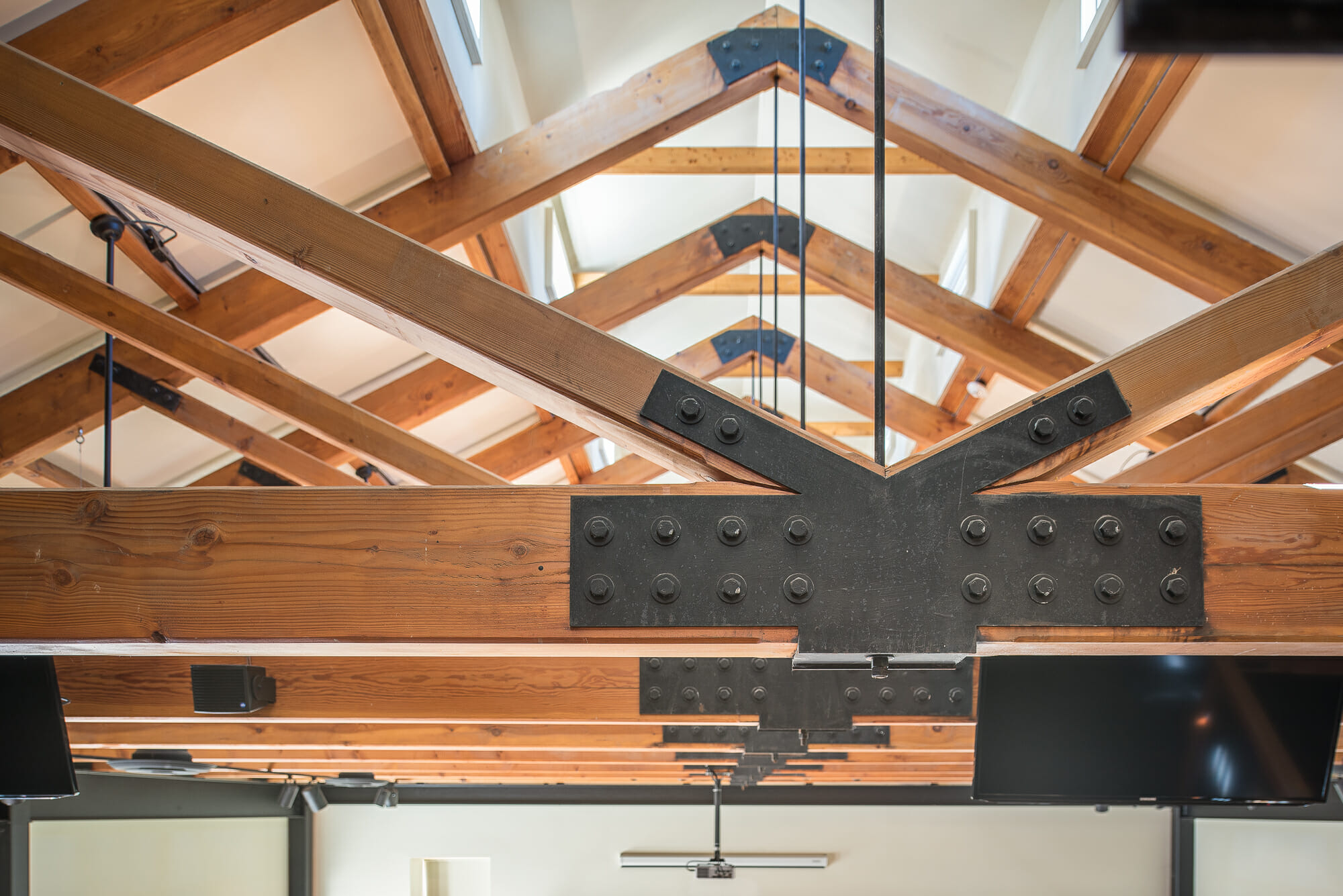
Steel Gusset Plates on a Timber Truss
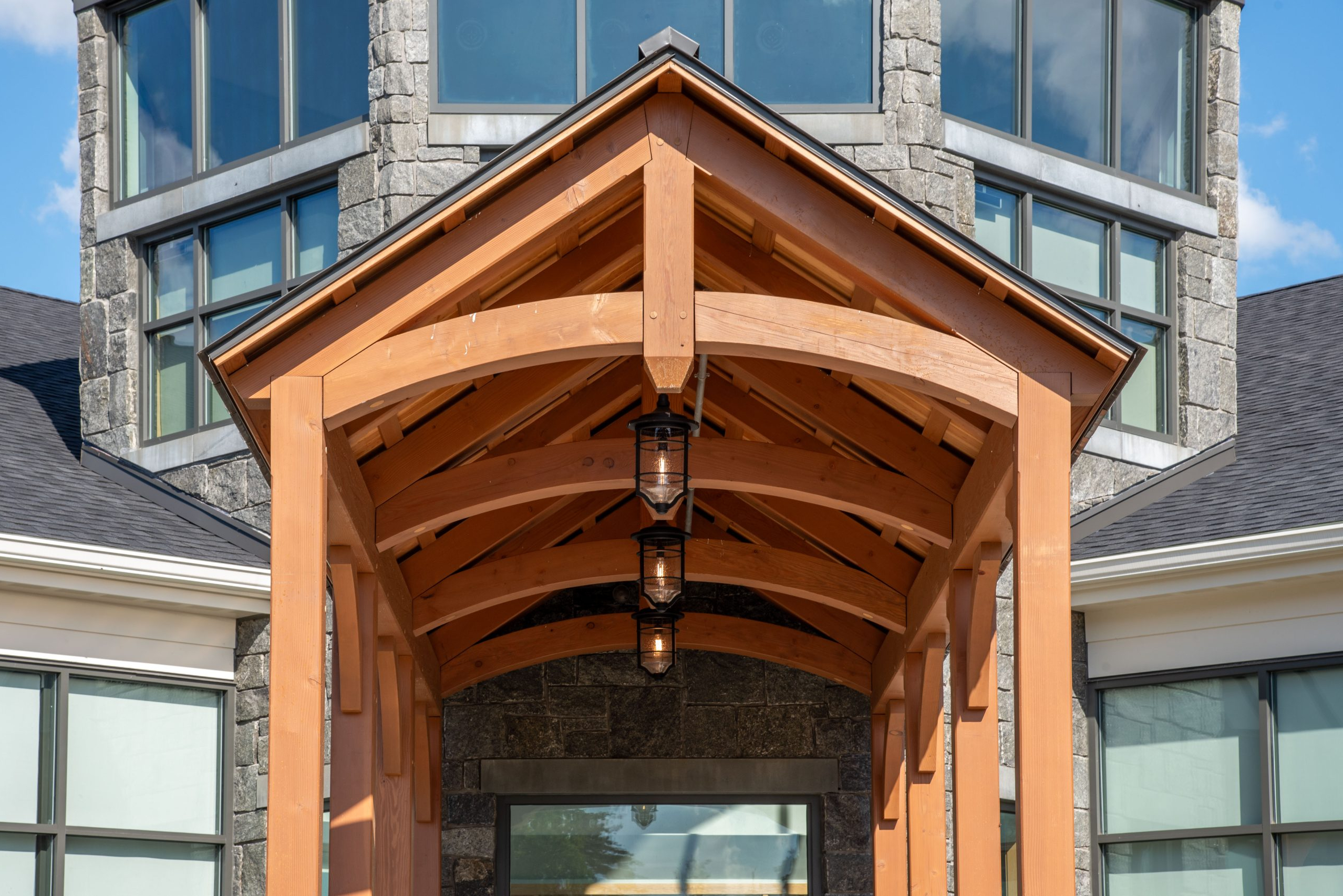
Timber Truss with Hidden Steel Joinery
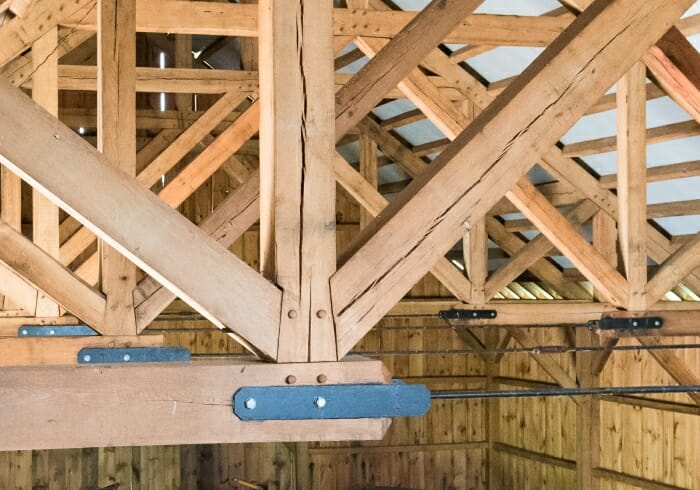
Timber Truss with Steel Tie Rod & Boot